


Control grubs with nematodes
Grubs are the larvae of various scarab beetles such as garden chafers, summer chafers, Welsh chafers and cockchafers. They live in the soil and feed on plant and grass roots. A heavier infestation can therefore cause considerable damage, above all in the lawn but also in beds.
With nematodes against grubs, the larvae can be controlled specifically and biologically. Which nematodes are suitable and when they should be applied depends mainly on the type of grub and its development stage.
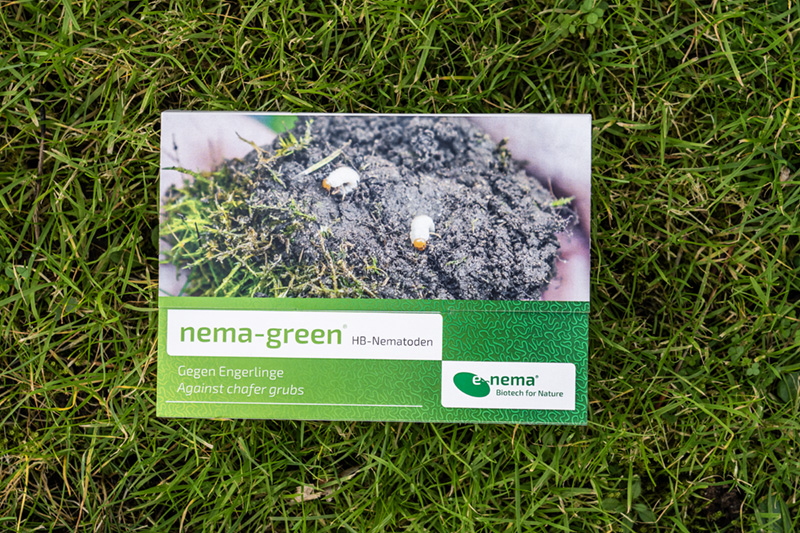
Get rid of grubs in the garden: nema-green®
nema-green® contains nematodes of the species Heterorhabditis bacteriophora. These natural enemies of various grubs are mixed with water and applied directly to the affected soil.



Recognising grubs: which beetle larvae are in the soil?
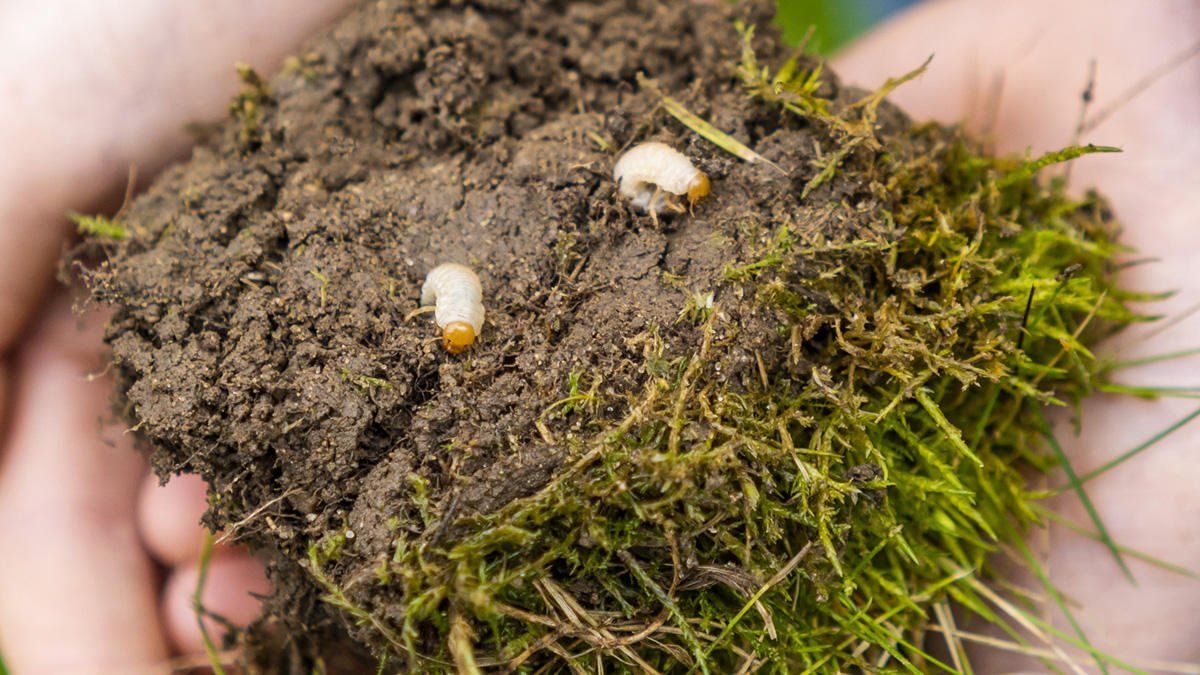
Grubs typically have a whitish to cream-coloured, often C-shaped curved body, a brown head capsule and three pairs of legs. Depending on the beetle species, however, they differ in size, hairiness and other characteristics.- Garden chafer grubs
- Summer chafer grubs
- Welsh chafer grubs
- Cockchafer grubs

What damage do grubs cause in the lawn and garden?
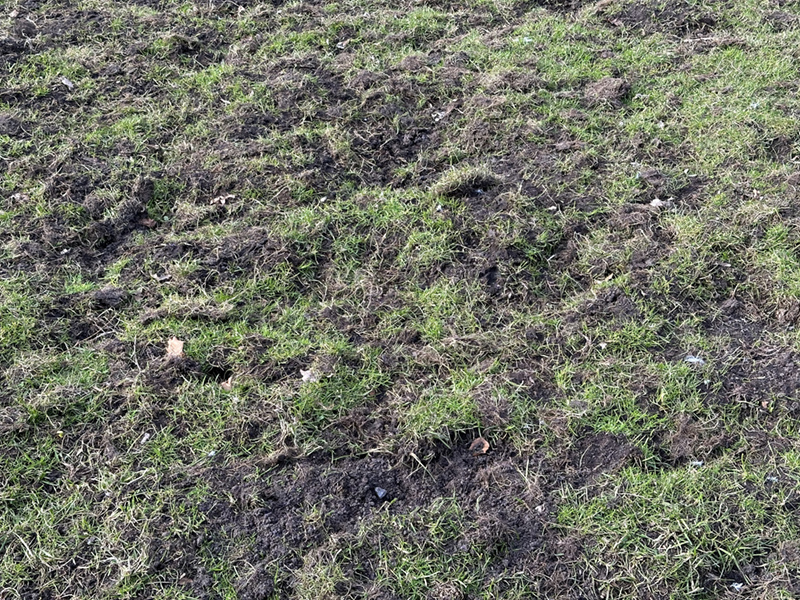
Grubs live underground and feed on the roots of grasses and other plants. As a result, the plants can no longer absorb sufficient water and nutrients. A grub infestation can show itself, for example, through yellow or brown patches in the lawn, weak plant growth or loose turf. Where root damage is severe, the damaged turf can sometimes be lifted easily from the ground. Additional damage can occur when birds or other animals search the soil for the larvae and churn up the turf.
What do I need to bear in mind when using nematodes?
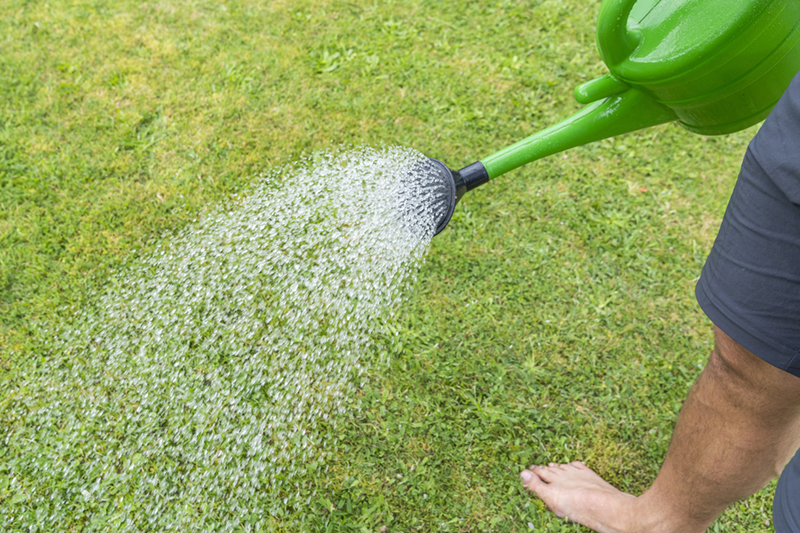
Using nematodes is very easy. They are supplied in a clay mineral powder and mixed with water according to the detailed instructions on the inside of the package. The nematode solution is then simply poured onto the affected areas. The soil should already be moist at the time of application and should be kept moist for the next 14 days, as the nematodes need sufficient moisture to survive and move.
Application period
The nematodes are only effective against certain development stages of the grubs, so the timing of the application should be based on the following periods:
Garden chafer: mid-July – end of September
Welsh chafer: April – early May
Summer chafer: mid-August – mid-September
Nematodes against grubs: biological and targeted control
Nematodes are microscopic roundworms and natural enemies of various soil-dwelling pests. Certain species can therefore be used specifically for the biological control of grubs.
The nematodes of the species Heterorhabditis bacteriophora contained in nema-green® move actively through the moist soil in search of suitable host larvae. They enter the grubs and release symbiotic bacteria there. The grub then dies. The nematodes multiply inside and can then go on to seek out further suitable larvae in the soil.

Safe and effective
Nematodes are the natural solution against grubs. The tiny roundworms control the larvae in a natural and effective way. No chemicals, no side effects.

Service and advice
We have been producing and selling nematodes for biological plant protection for more than 25 years. Do you have questions? We have the answers!

Controlled quality
Every production batch is carefully checked and tested for quality. We only sell what really works.